
Learning isn’t magic – but it can be remarkably effective when it follows the right process.
Every time you’ve learned something new – riding a bike, tying your shoes, figuring out a new device – you went through the same natural process: you understood the principle, practiced through trial and error, and eventually applied it on your own. The LPC® method turns that process into a structured, proven educational framework that we have successfully used in practice for over 25 years.
What Is the LPC® Method?
The LPC® method (Learn – Practice – Communicate) is the signature methodological approach developed by HalPet, built on the natural process of how people actually acquire knowledge. It consists of three consecutive steps that together form a complete learning cycle, from first encountering a new topic to applying it independently in real-world situations.
This is not a revolutionary technique promising overnight results. The LPC® method is a modern, effective approach that prioritizes long-term understanding and applicable competence over short-term memorization.
What steps make up the LPC® Method?
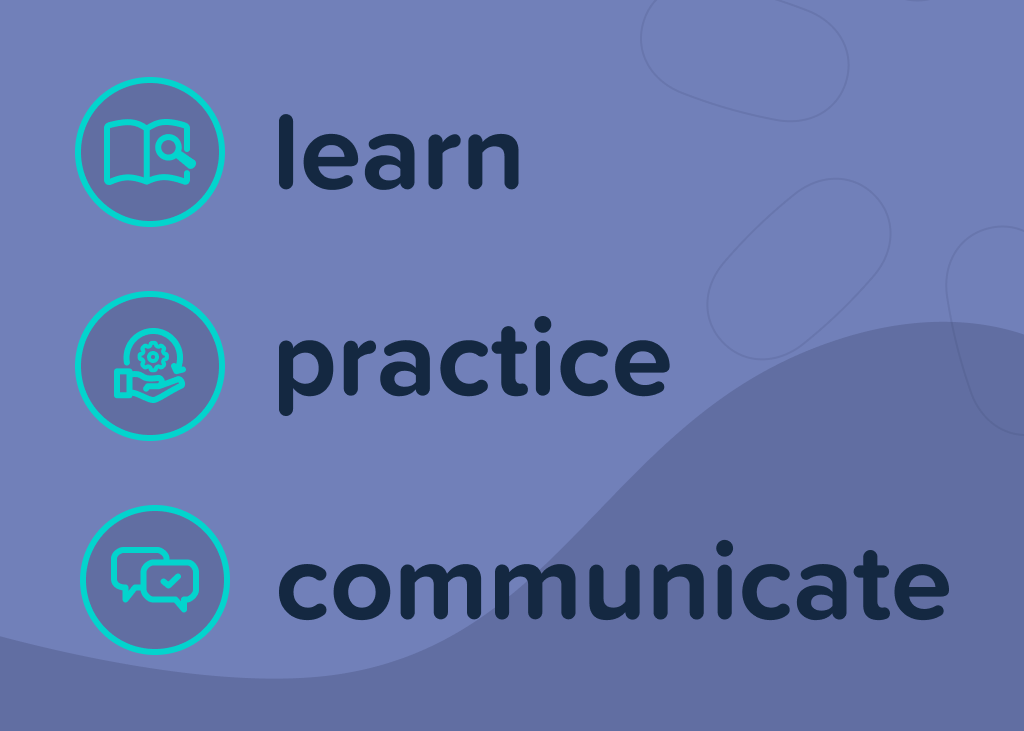
The LPC® learning method is made up of three steps: Learning (of new concepts), Practice (new skills), and Communicate (the acquired knowledge).
1. Learn – Introduction to New Knowledge
In the first step, the learner is introduced to new content, skill, or concept. The key element here isn’t simply presenting information but to clarify the learning goal: answering what is being learned, why it matters, how it works, and what changes when this knowledge is or isn’t acquired.
Educators select relevant and specific content with careful attention to what is genuinely useful and achievable within the available time.
2. Practice – Learning Through Active Engagement
The second step is the heart of the method. Learners practice new knowledge and skills through dynamic, interactive, and clearly structured activities that engage cognitive, affective, and psychomotor learning.
The educator plays their most active role in this phase by guiding, correcting, giving examples, and adapting the pace to the needs of the group and individual participants. The goal of the Practice step is to fully prepare the learner for what comes next.
3. Communicate – Applying Knowledge in Real Situations
The third step proves participants actually learned something. They apply what they’ve acquired in simulations of real business and everyday situations – whether that’s resolving a conflict, leading a team, writing a report, or any other context relevant to their goals.
In this phase, the trainer steps back, but continues to observe carefully and delivers constructive, final feedback. A successful Communicate phase results in visible change – not just in expertise, but in attitude, motivation, and the standards the learner sets for themselves going forward.
Why Does the LPC® Method Work?
The focus in modern education is increasingly shifting from “what?” (content) to “how?” (method, strategy, approach). The LPC® method answers precisely that “how” – it isn’t just a tool for absorbing information, but a skill that applies to any situation where a goal needs to be reached.
Several key reasons why the method delivers results:
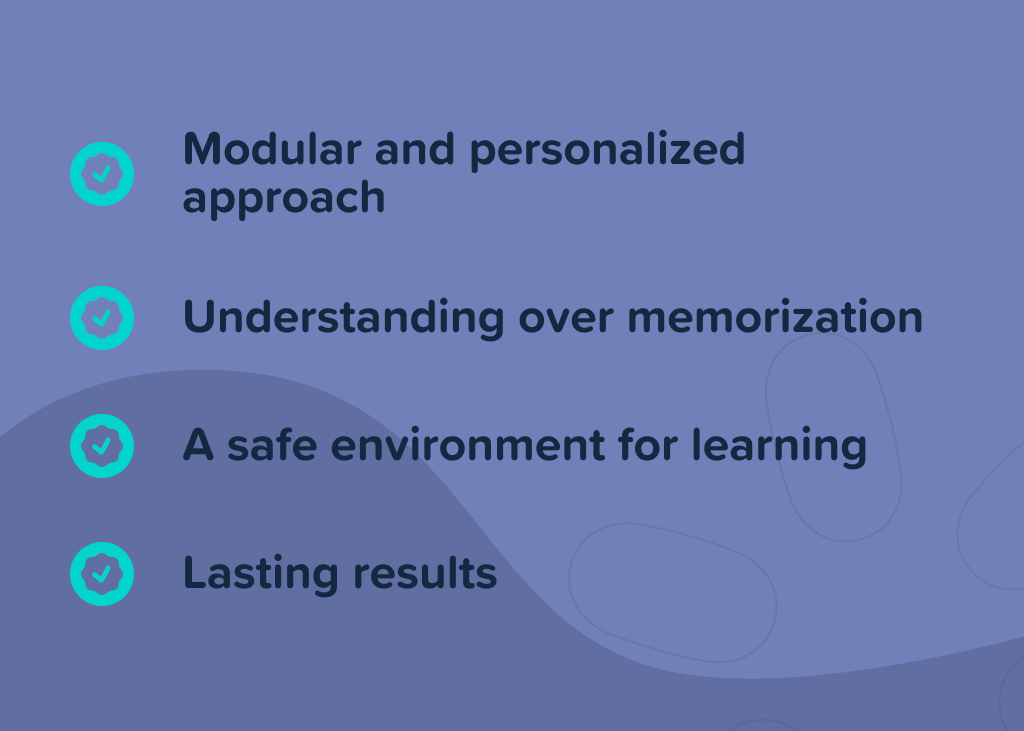
- Modular and personalized approach – at the outset, concrete learning goals are defined based on the learner’s real needs and available time, rather than a one-size-fits-all program
- Understanding over memorization – knowledge acquired without understanding is short-lived and difficult to transfer to new situations
- A safe environment for learning – the method creates an atmosphere that motivates, supports, and gives learners a sense of security and achievement
- Lasting results – the priority is not the speed of acquisition, but the quality and durability of what is learned
Who Is the LPC® Method For?
The method was originally developed for business professionals who need visible, immediately applicable results in real working environments. It is grounded in the principle that anyone who is motivated and has a need to learn can acquire any knowledge or skill – regardless of their starting point.
The LPC® method respects all the principles of modern adult learning and adapts to different learning styles. Its flexibility, expertise, and multidisciplinary nature make it suitable for individual and group education, in-person and online programs, general and specialized courses alike.
LPC® as a Life Skill
What sets the LPC® method apart from standard educational approaches is its reach beyond the classroom. The same three-step process used in training can be applied wherever there is a goal to achieve – when delegating tasks, resolving conflicts, mentoring colleagues, learning a new hobby, or teaching a child something for the first time.
In a world that demands continuous learning and rapid adaptation, the LPC® method offers something genuinely valuable: a structure that mirrors the way people actually learn – not how they are theoretically supposed to.

Be the first to comment!
You must be logged in to post a comment.